A collaborative Audio Description project exploring the representation of blindness in historic art. Funded by Understanding British Portraits Network.
More...
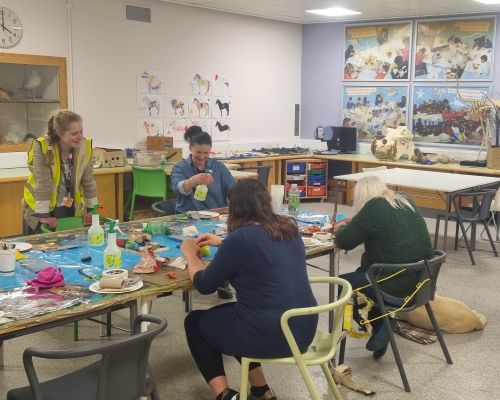
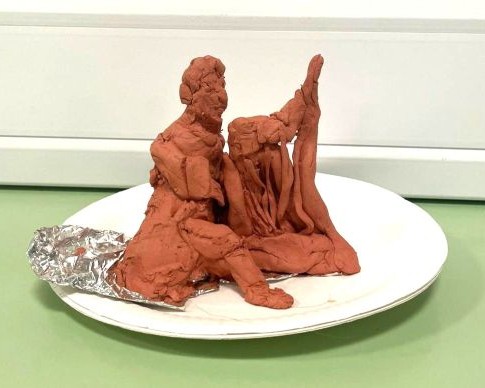
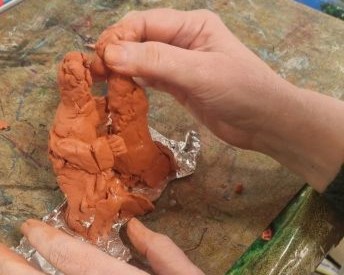
making clay sculptures
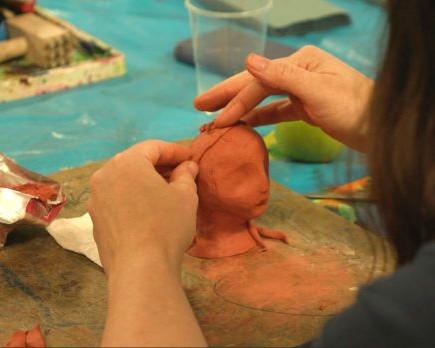
a clay head for the women rarely represented in art
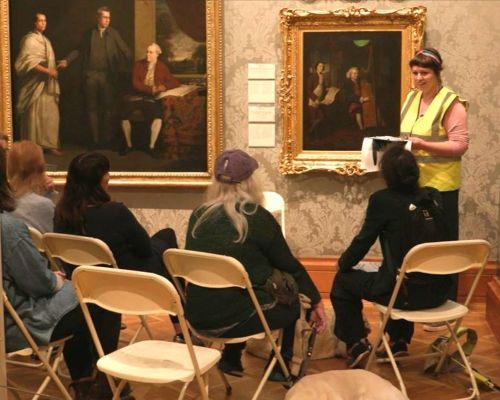
Steph with one of the portraits at National Museum Cardiff
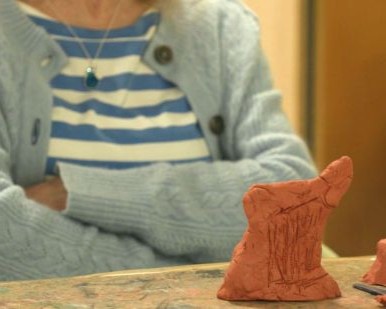
a clay harp by Margaret
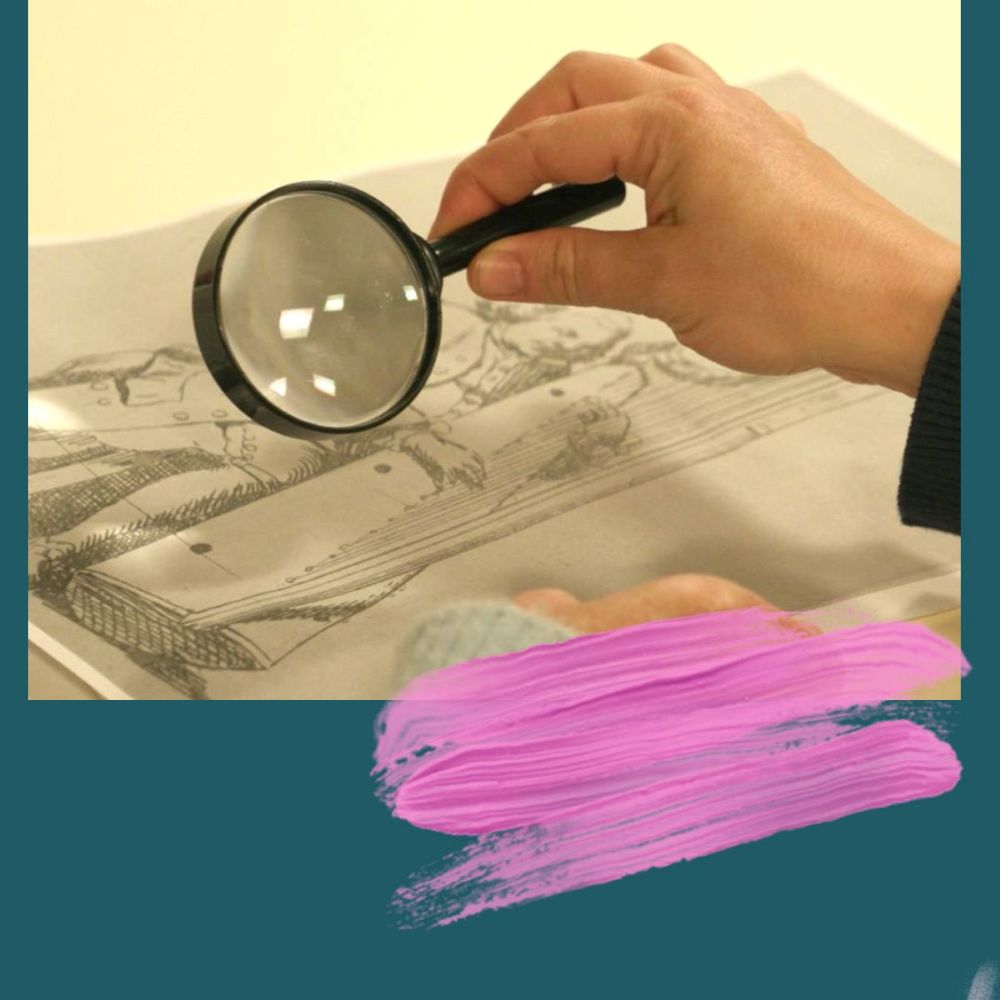
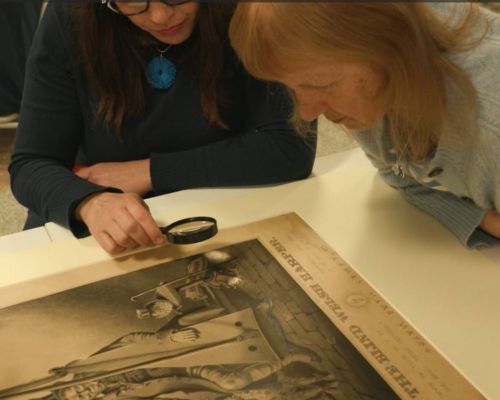
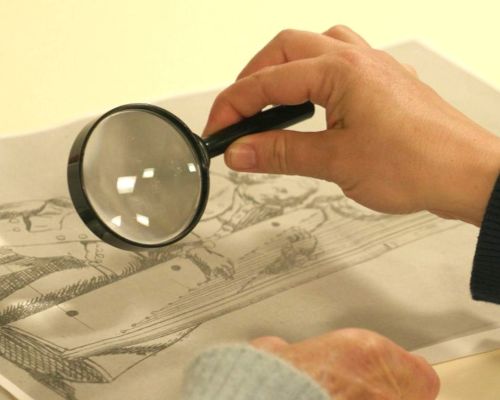
using a magnifying glass as a visual aid
Siân's blind harpist in clay
gallery discussions
playing with clay using a foil base
exploring prints
What does it mean as a disabled person to be ‘seen’ – or not – in museums and cultural spaces?
For The Blind Harpists: Another Look, I worked with a group of blind and partially blind artists to explore this question, for a research fellowship funded by Understanding British Portraits Network.
Together we took another ‘look’ at portraits of blind harpists at National Museum Cardiff.
Through conversation and a creative workshop in clay, we explored how blindness is represented in the portraits, and what it means as a blind person to be ‘seen’ – or not seen – in cultural spaces.
The project resulted in the creation of new, co-created Audio Descriptions, updated interpretation for the paintings, and an Audio Described film documenting the process. You can read more about the process in this article I wrote for CELF.
A slow, meditative look at paintings by Gwen John and J.D. Innes, yn y Gymraeg. Commissioned by Arts Council of Wales for the Cultural Cwtsh.
More...
How can we use art and digital resources to support the wellbeing of NHS and healthcare staff?
That was the question posed to us for this commission for the Cultural Cwtsh, a digital health project funded by Arts Council of Wales.
When I was bedbound with health issues, I spent a lot of time listening to guided meditations. For this commission, I wanted to see how this could be combined with looking at art, using creative Audio Description techniques.
The two Slow Looking videos (below) were the result: gentle invites to listen, observe, and slow down. Something that can be done easily at a work desk, or on a lunch break.
The videos are slow-paced with a meditative feel, and last around 5 minutes. Lots of galleries have Slow Looking resources available, but there are very few yn y Gymraeg.
The Letter, by Gwen John, 1924
Gwen John made several versions of this painting, using the same model. She painted the first in 1919, as a gift for her friend Isabel Bowser, who was terminally ill with cancer. Isabel died before Gwen finished the painting. She grieved this for many years later.
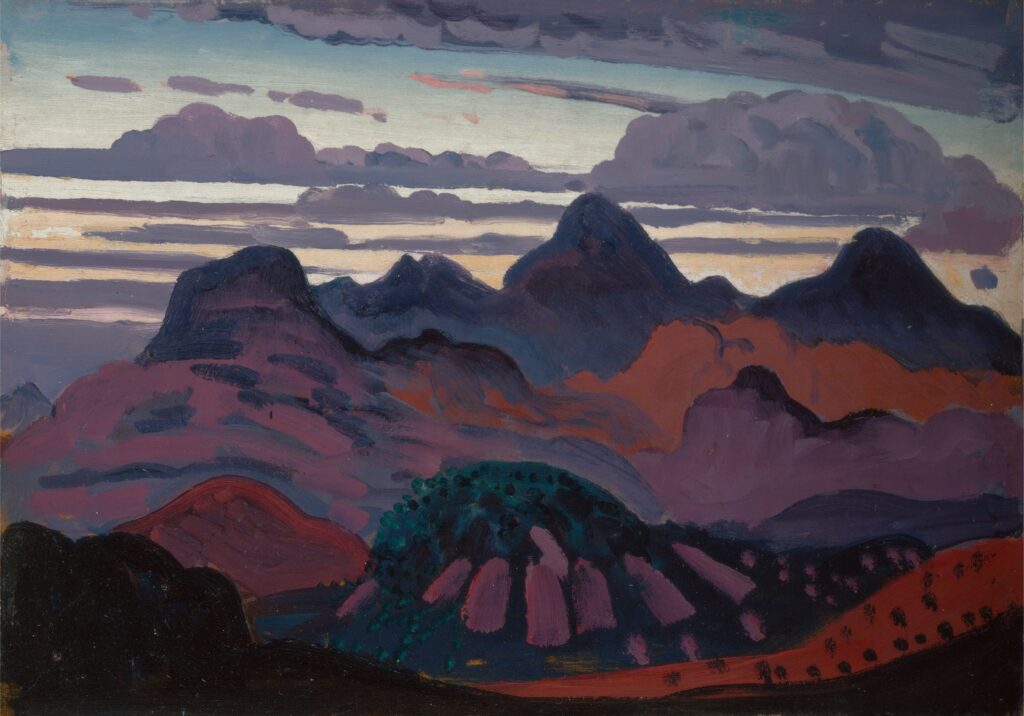
The Moelwynion from Llan Ffestiniog by J.D. Innes, 1912-13
Innes painted this scene sometime between 1912 and 1913; the most productive years of his life. Aware that his health was deteriorating, he produced about two paintings a day, perhaps driven by an attempt to overcome his illness. He died of tuberculosis in 1914, aged 27.
James Dickson Innes (1887–1914), The Moelwyns from Llan Ffestiniog, oil on panel, Yale Center for British Art, Paul Mellon Fund, B1990.2.1. Public Domain.
Videos filmed and edited by Elin Mannion and Robert Cannon, with voiceovers by Bethan Harvey.
The Unfair Index
A UK-wide survey for disabled people to to help create more inclusively designed products and services.
More...
One in five people in the UK are disabled. For many of us, something as simple as leaving our homes or travelling to work can be filled with barriers. That’s not fair, and it needs to change.
I’ve been working alongside Designability as a Lived Experience Advisor since 2025, helping to shape their major UK-wide research survey, The Unfair Index.
The aim is to find the biggest areas of unfairness facing disabled people in everyday life; and to identify where better, designed products or services are most urgently needed.
As Lived Experience Advisors, we helped shape Designability’s approach to the survey and how the findings will be used, drawing from our own lived experiences.
Read about my experience as a Lived Experience Advisor in this blog post.